Recently viewed


Smart air shipping done right
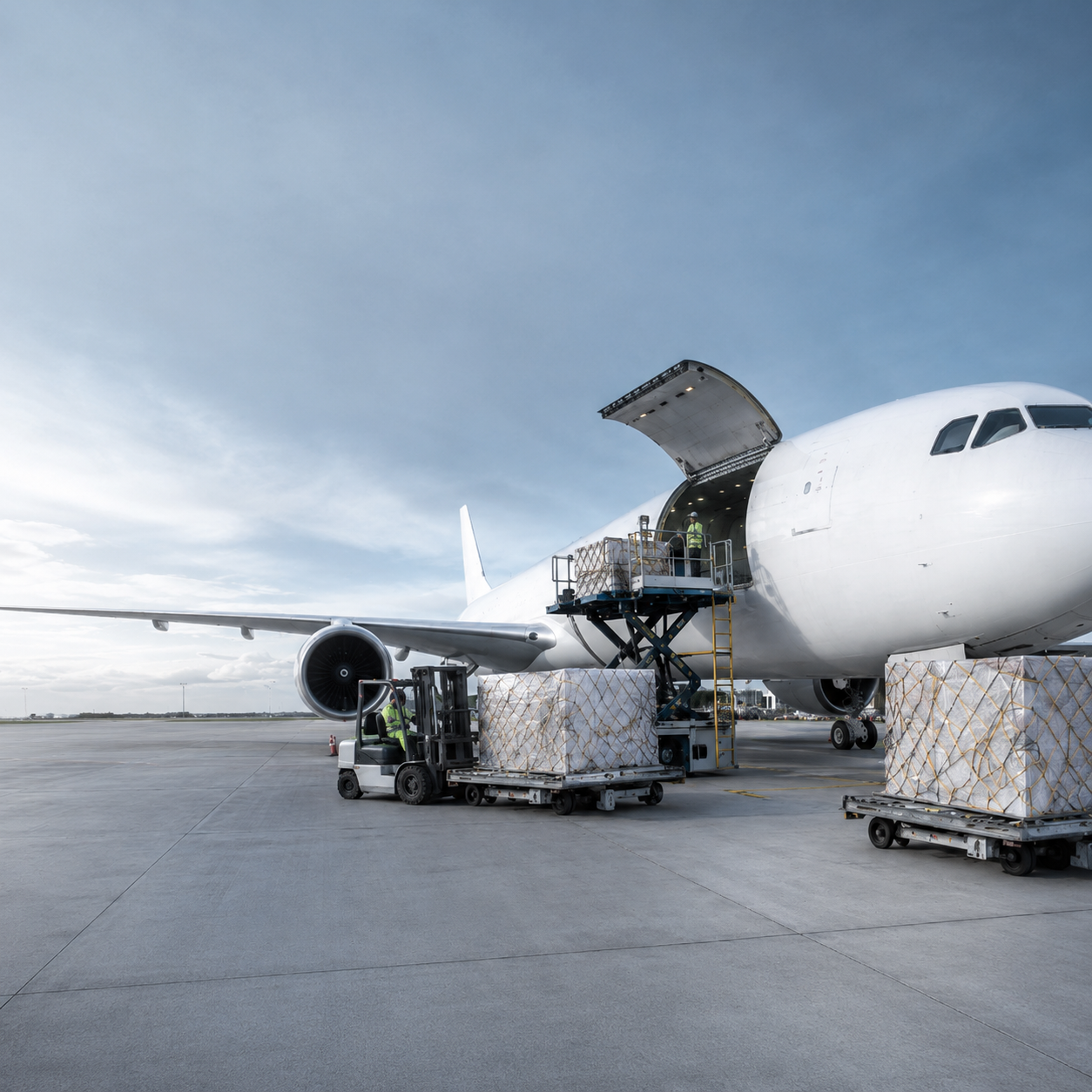
Deliver your time-sensitive freight with flexible air cargo options from Upiox. Get more negotiating power with leading airlines and access to capacity when you tap into our unrivaled scale and unmatched expertise.
Elevate your air shipments with value added services
Heavy & oversized
Transport your overdimensional air freight. We will coordinate every move with care.
Temperature controlled air
From refrigeration to freeze protection, mitigate risks and protect your air freight.
U.S. domestic expedited
Gain negotiating power with domestic air freight carriers, even on short notice.
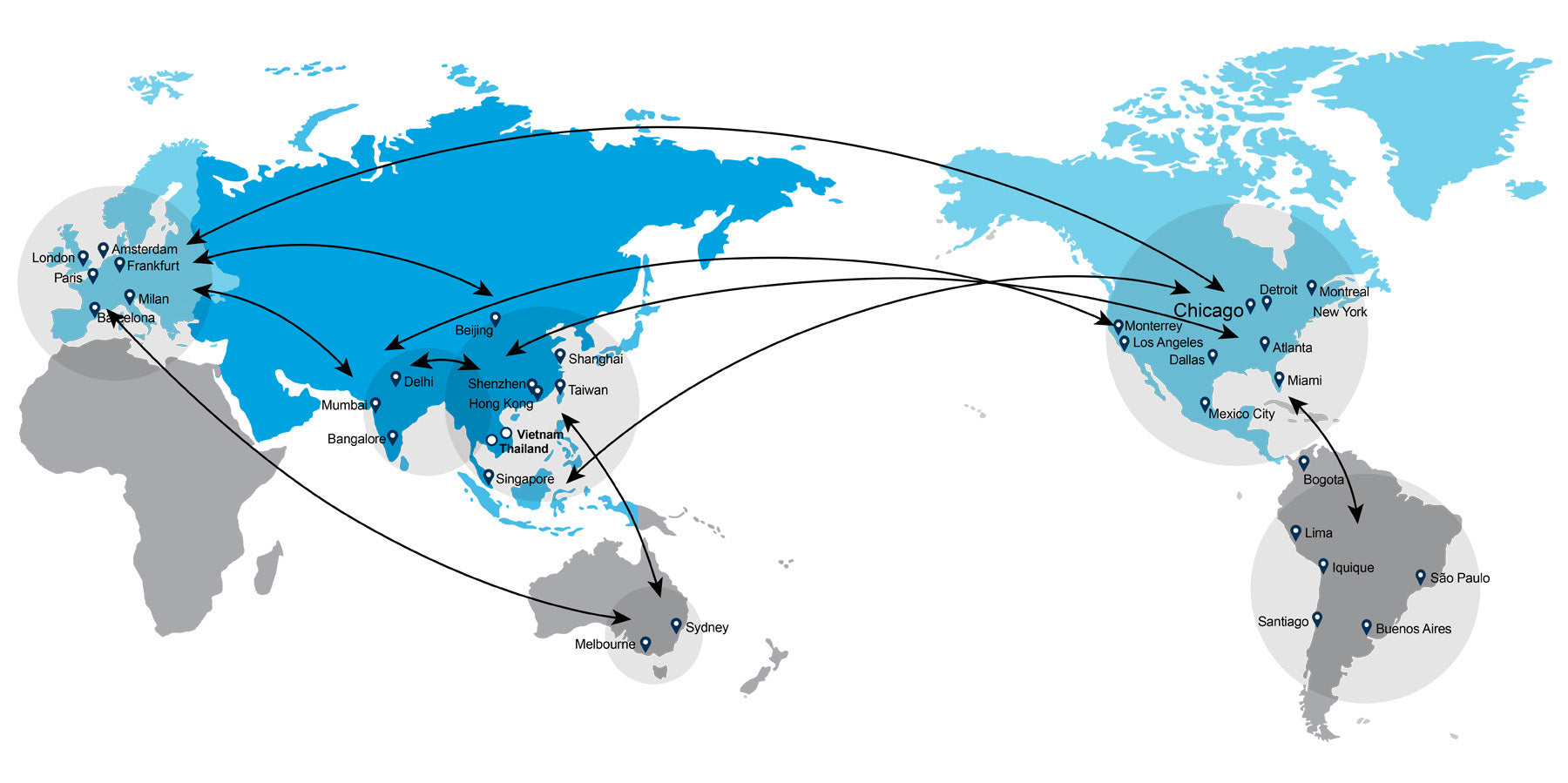
Move your air cargo through our global network
Our core air shipping corridors span the globe, connecting major trade hubs across North America, Europe, Asia, and Latin America. From popular hubs to emerging cities, our global air shipping network makes it simple to improve supply chain agility.
Frequently asked questions
Air freight shipping (also called air cargo or air shipping) is the transportation of goods by aircraft. It is the fastest and one of the most reliable modes of shipping, often used for time-sensitive, high-value, or long-distance shipments.
Because air freight is more expensive than other methods, it’s generally reserved for urgent or high-priority cargo that needs to arrive within days rather than weeks. In summary, air shipping means moving products through the air (via cargo planes or passenger aircraft) to achieve faster delivery.
Air shipping involves a series of steps to get your goods from origin to destination via airplane:
- Booking & documentation: You start by booking an air shipment with an airline or freight forwarder, providing details about your cargo. Necessary documents (e.g., an air waybill and customs paperwork for international loads) are prepared at this stage.
- Export handling: The freight is picked up and transported to the departure airport. Air cargo undergoes security screening and is consolidated if needed (often packed into a unit load device container or pallet with other shipments). Ground crews then load the cargo into the aircraft’s cargo hold.
- Air transport: The airplane (either a dedicated cargo plane or a passenger flight with cargo space) carries the shipment through the air to the destination airport. This flight drastically reduces transit time compared to surface transport, especially over long distances.
- Arrival & delivery: Upon arrival, the cargo is unloaded. For international shipments, it must clear customs at the destination country’s airport (with customs officials inspecting documents and the goods). After clearance, the freight is transported from the airport to its final destination (e.g., by truck or local courier) for delivery to the receiver (consignee). Throughout this process, coordination between the shipper, carrier, customs brokers, and forwarders ensures the shipment moves smoothly from pickup to final delivery.
Shipping freight by air offers several advantages for global shippers:
- Speed: Air freight is by far the fastest shipping method, with transit times of hours or days instead of weeks. This enables urgent replenishment of stock and last-minute delivery to meet tight deadlines.
- Global reach: You can ship almost anywhere in the world via air. Major airlines and air cargo networks connect thousands of airports globally, making remote or landlocked regions accessible via connecting flights.
- Inventory management: The speed of air freight reduces warehouse inventory levels and is often critical for just-in-time supply chains. Perishable or seasonal goods can arrive to market in time, avoiding obsolescence.
- Tracking visibility: Air freight usually comes with advanced tracking and visibility. Shippers can get real-time updates on a shipment’s status and more precise ETA, which aids planning.
Yes. Air shipping is typically the most expensive mode of freight transport. It can cost significantly more than ocean freight for the same volume of goods.
However, shippers have options to manage air freight costs. Many carriers offer different service levels—from urgent next-flight-out options to deferred economy services—at varying price points. By choosing a slightly slower air service or consolidating cargo, you can obtain more economical rates while still moving goods faster than via ocean or road transport.
Air shipping transit times are much faster than other methods, but the exact duration depends on the service level and route distance:
- Express/priority air: Typically 1–3 days for major international routes. This is the fastest option and often uses direct flights or premium services that prioritize your cargo.
- Standard air freight: Usually around 3–7 days transit. Standard services balance speed and cost, and may involve one or two stopovers for connecting flights.
- Economy/deferred air: Approximately 5–10 days (or longer) depending on how many stops or consolidations are involved.
- Domestic air shipments: For shipments moving within the same country or region, delivery can be as quick as overnight up to two days, depending on the distance and whether a direct flight is available.
By comparison, ocean freight from, say, Asia to North America can take 3–6 weeks. So even the slowest air freight service is considerably faster than shipping by sea. Keep in mind the clock for air transit does not include pickup, customs clearance, or final delivery on the ground, but even including those, air is still the speediest option for long-range shipping.
Cargo restrictions are in place for nine classes of dangerous goods. Some goods are too dangerous to transport on any aircraft, while others need approval from the aviation authority of the countries involved.
While there are limits, oversized or heavy cargo can be shipped by air. Standard passenger planes have limited cargo door sizes and weight capacities, so extremely large or heavy items won’t fit on them.
Instead, freight forwarders use dedicated cargo aircraft (freighters) or charter an entire plane for oversized loads. Airlines and logistics providers operate large freighter models, like Boeing 747Fs or Antonov AN-124s, which are designed to carry out-of-gauge cargo. These aircrafts can accommodate industrial machinery, vehicles, and other bulky equipment that exceed the size of regular aircraft pallets.
Air freight is not the most sustainable mode of transport. In fact, aircrafts emit the most greenhouse gases per tonne kilometre, meaning it has the greatest environmental impact over other modes of transport.
Air freight and ocean freight differ mainly in speed, cost, and capacity:
- Transit time: Air is fastest, with shipments arriving in 1–5 days internationally. Ocean freight can take 20–30 days or longer, making it better only if speed isn’t critical.
- Cost: Air is 5–10 times more expensive than ocean. Ocean is far more economical for high-volume freight.
- Environmental impact: Ocean is far greener, with a much lower carbon footprint. Air freight has the highest emissions per ton-kilometer.
Which should you choose?
- Choose air freight for urgent, high-value, or time-sensitive cargo.
- Choose ocean freight for large, heavy, or lower-value shipments where cost savings outweigh speed.
- Many businesses use a mix—air for urgent replenishment, ocean for bulk replenishment.
Didn't find your answer?
Our customer service will be happy to help you.
Testimonials